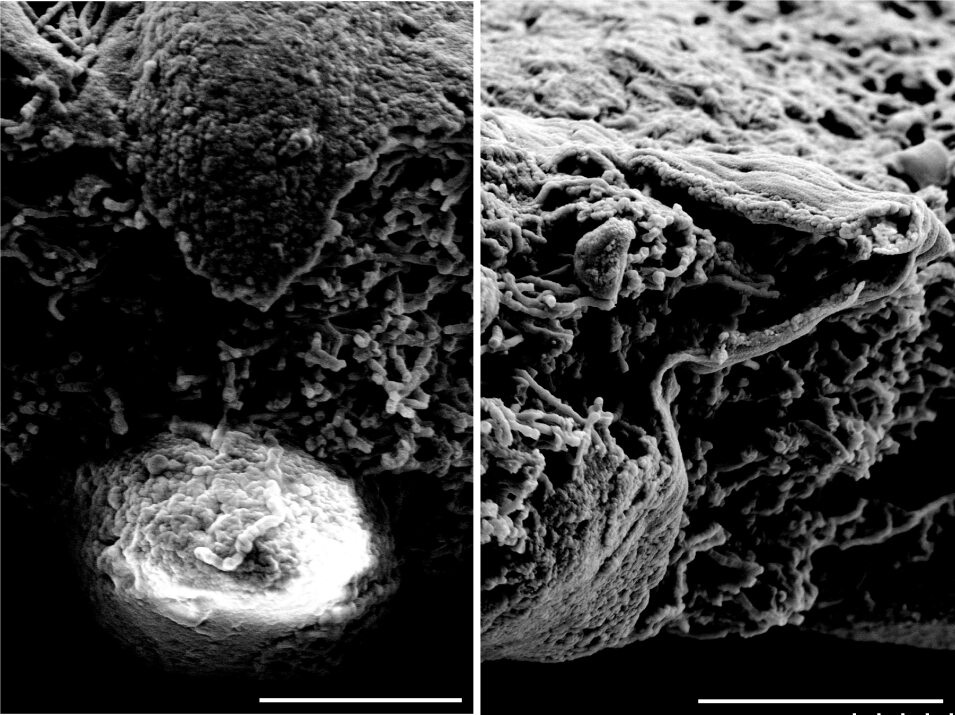

Electron micrograph of extracellular matrix protein complexes from human amniotic membrane
Engineering Biomimetic Niches
Our research involves both the development and use of novel models mimicking existing biological systems. We use polymer-based matrices to model the extracellular matrix (ECM), a protein-rich system that shapes cellular behavior with microenvironmental cues. Our biomaterials work not only improves our ability to study complex biological systems in vitro, but also contributes directly to therapeutic treatments for wound healing, chronic infection, fibrosis, stroke, and cancer.
Learn more about engineering biomimetic niches


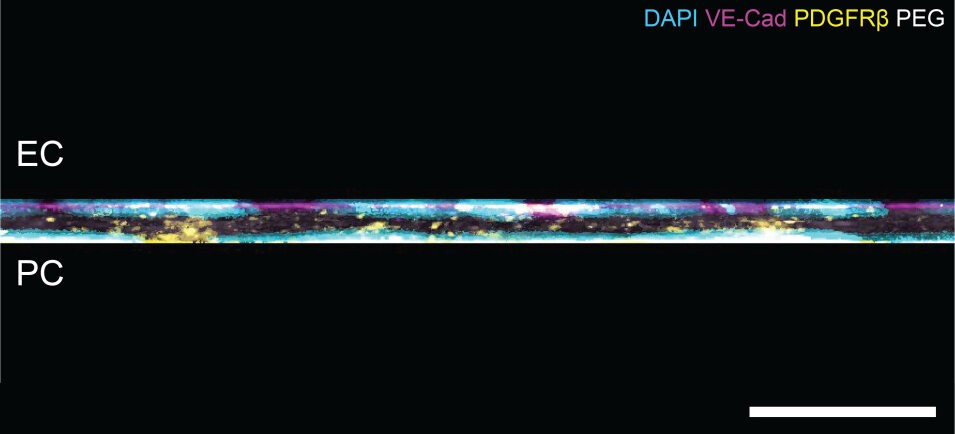
Scanning electron micrograph of endothelial cells and pericytes seeded in a bilayer arrangement to mimic microvascular structure.
Inflammation & the Microvasculature
Our research also focuses on the role of microvascular and circulatory cells in inflammatory disorders. Our studies of the vascular pericyte layer work to elucidate its anti-inflammatory properties and how changes in the microvascular environment lead to disease. In addition, we are working to better understand other cell types involved in the immune response. Neutrophils are the most prevalent leukocytes in circulation and our lab is studying the range of functions they serve both in circulation and post-vascular transmigration. Using our engineered biomimetic tools to study complex microvascular systems in vitro, we are able to investigate cellular factors contributing to inflammatory and fibrotic diseases including scleroderma and idiopathic pulmonary fibrosis.
Learn more about inflammation and the microvasculature